

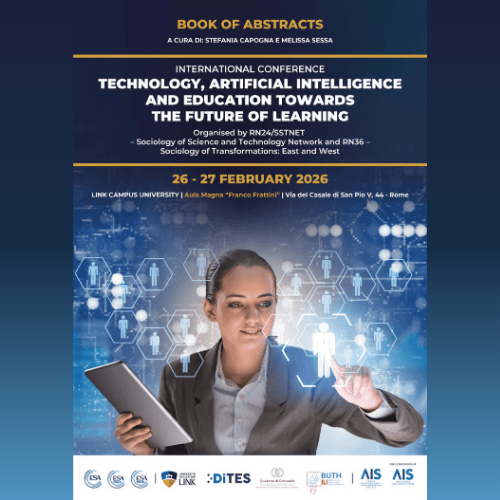
ESA conference “Technology, Artificial Intelligence and Education: Towards the Future of Learning”
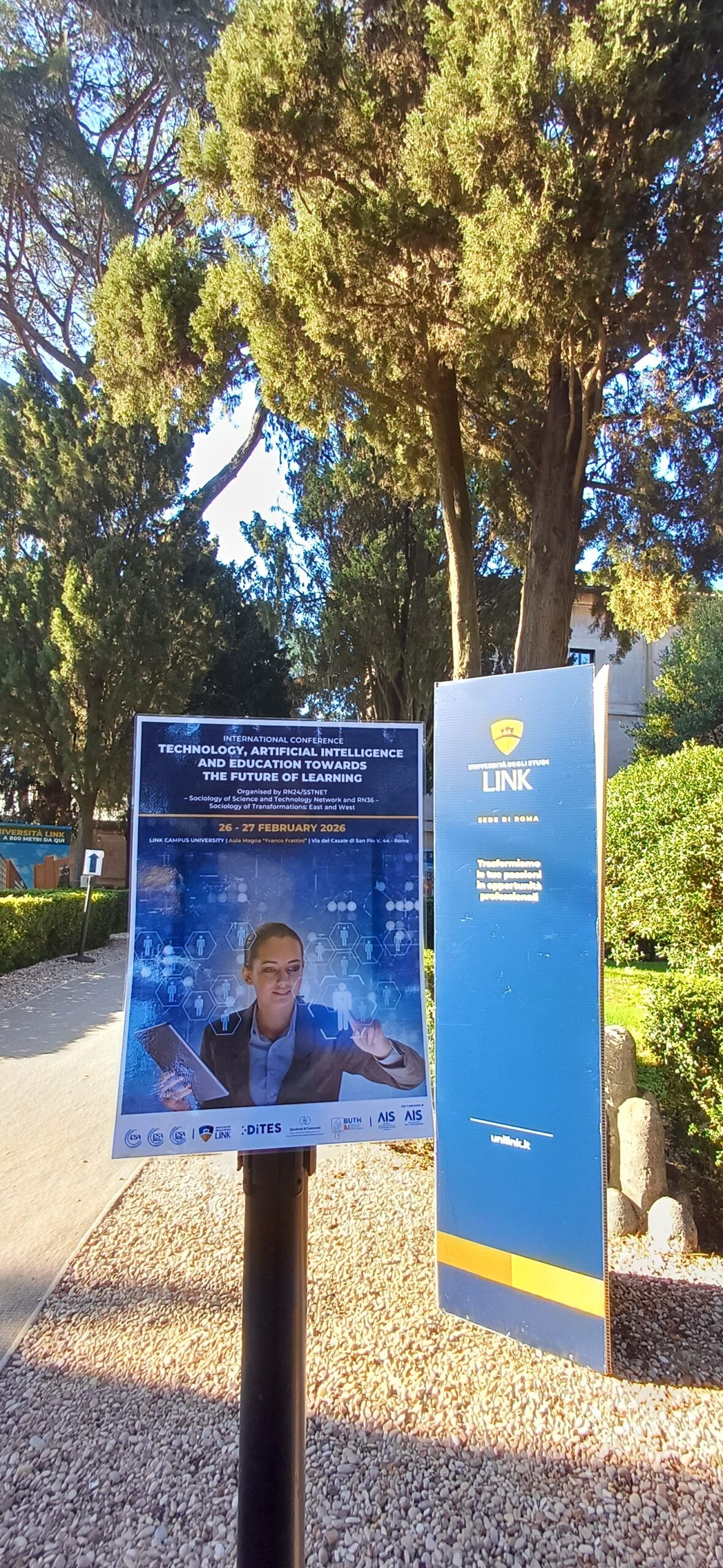
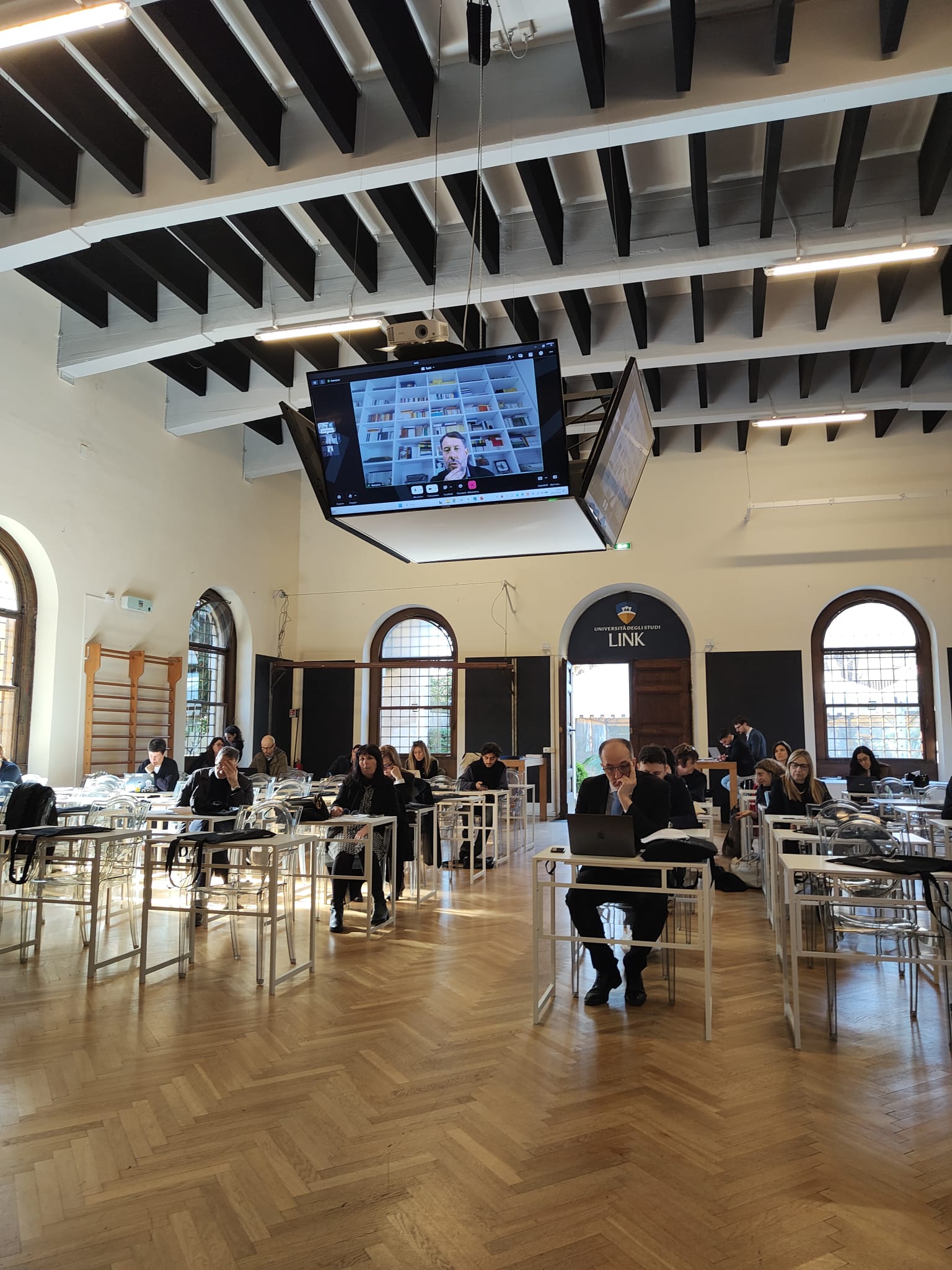
On 26 and 27 February 2026, Link Campus University in Rome hosted the European Sociological Association’s midterm international conference entitled “Technology, Artificial Intelligence and Education: Towards the Future of Learning”, organised by the RN24/SSTNET research network (Sociology of Science and Technology Network) and RN36 -Sociology of Transformations: East and West.
The conference brought together international scholars and researchers to discuss, from a sociological perspective, the growing role of artificial intelligence and technologies in the transformation of education and society. The programme included international keynote speeches, parallel sessions, a panel dedicated to doctoral students and networking opportunities, addressing key issues such as education, governance, inclusion, work, citizenship and health.
SCIENTIFIC COMMITTEE
Gonçalo MARQUES BARBOSA, University of Porto
Stefania CAPOGNA, Link Campus University
Romina GURASHI, Link Campus University
Roberta IANNONE, Sapienza University
Melissa SESSA, CNR – IRPI
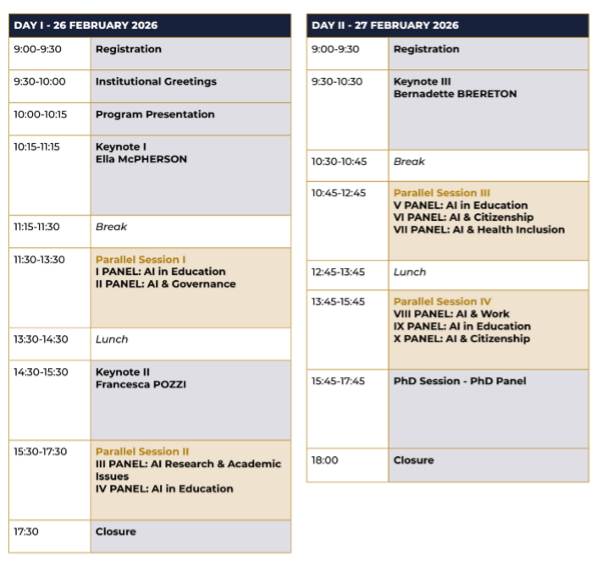
26 February 2026 – Session I
KEYNOTE SPEAKER
Generative AI and the Social of Scholarship – E. McPherson, Queen’s College, Cambridge
Panel I – AI in Education
Chair: M. FRANCESCHELLI, UCL Social Research Institute
Discussant: S. CAPOGNA, Link Campus University
- When Machines Learn, Humans Must Learn Better: AI Literacy and the Future of Education – A. Cardinale, M. Nocenzi, Sapienza University
- Tail Sensitivity of LLM Outputs Under Prompt Perturbations – A. Novak, M. Kovačić, Zagreb School of Economics and Management
- Formative Feedback Through Large Language Models on Narrative and Expository Texts in German: Strengths, Limits, and Prompt Design – C. Peschak, S. P. Harmer, University College of Teacher Education Vienna
- The Sonification of Chemical Data as a Tool for STEM Education and Inclusivity – G. Tranfo, AIDII
Panel II – AI & Governance
Chair: M. ANGELINI, Link Campus University
Discussant: F. GRECO, University of Udine
- Exploring Students’ Ethical and Privacy Concerns in the Adoption of Artificial Intelligence – A. Mortara, R. Scramaglia, IULM University, Milan
- Navigating Regulatory Convergence: Strategies for Corporate Compliance with GDPR and the EU Artificial Intelligence Act – F. De Stefani, Link Campus University
- Digital Law, Data Governance and Artificial Intelligence – F. Faini, Pegaso Telematic University
- Innovating Museum Accessibility Through Cross-Sector Partnerships: The SCAAUT Business Model – N. Cipullo, Link Campus University
- Objective and Subjective Culture in Platform Society – T. Censi, Leoniano Theological Institute
- Towards Inclusive AI: Regulatory and Ethical Challenges – M. Forleo, L. Evangelista, C. Fonzo, INAPP
KEYNOTE SPEAKER
When Ai Meets Education: Navigating Promise, Peril, and Systemic Change – F. Pozzi, Institute for Educational Technologies, National Research Council
Panel III – AI Research and Academic Issues
Chair: V. FEDELE, Link Campus University
Discussant: P. C. GRIMALDI, Link Campus University
- AI, Microlearning, and the Social Fabric of Lifelong Learning: Opportunities and Inequalities in the Italian Context – A. Pedone, INAPP
- Digital Inclusion In The Age Of AI: Examining Approaches To Ensure Educational Equity For Students From Different Socioeconomic Backgrounds – F. Campitelli, N. Strizzolo, University of Teramo
- AI Play and Co-Creating Board Games with Generative Artificial Intelligence – G. Conti, University of Modena and Reggio Emilia
- Learning With Ai, Learning About Ai: Evidence From University Teaching And Employer Engagement – M. Ruzzeddu, University of Niccolò Cusano
- AI, Qualitative Inquiry, and Analytical Labor: Insight from MAXQDA – P. Binder, Institute of Philosophy and Sociology, Polish Academy of Sciences
Panel IV – AI in Education
Chair: M. R. RE, Link Campus University
Discussant: S. ROMITI, INVALSI
- Affective Algoagents and the Making of the Social Self in algomorphic societes – E. Grassi, San Raffaele Open University of Rome
- AI-Driven Digital Twin with Agent- Based Modeling for Behavioural and Learning Analysis in Informatics Education – G. Vonitsanos, I. Moustaka, Hellenic Open University
- Accessibility in Digital Learning: Opportunities and Challenges – E. Sciarretta, E. Greco, Link Campus University
- Teenagers and digital technologies. A Comparison Among The Perspectives Of High School Students, Teachers And School Heads – A. F. Canta, A.Mattozzi, L. Tonolli, V. Konidari, Polytechnic of Turin
27 February 2026 – Session II
KEYNOTE SPEAKER
Transforming Gender Equality and Inclusion in Higher Education in Ireland – B. Brereton, Dundalk Institute of Technology
Panel V – AI in Education
Chair: A. CAROSELLI, University of Milan
Discussant: I. CORTONI, Sapienza University
- Playing The City: Gamified Urban Participation As A Model For Citizen Science-Based Learning – I. Iannuzzi, M. Sessa, Unitelma Sapienza University
- Critical Thinking, Decision Fatigue, And Cognitive Disengagement In Ai-Mediated Learning: A Crosssectional Study On Students’ Use Of Generative Tools – V. Donadel, M. Zuin, Luiss University
- Inequalities In The Development Of Artificial Intelligence And Their Consequences For Inequality In Education – U. Šuvaković, University of Belgrade – Faculty of Education, Department for Philosophy and Social Sciences
- Exploring Socio-Cultural And Ethical Dimensions Of Ai Adoption In Academic Practices – M. C. De Angelis, Link Campus University
Panel VI – AI and People and Citizenship
Chair: A. DE FEO, Roma Tre University
Discussant: D. POLIANDRI, INVALSI
- Community Engagement Through Citizen Science: A Participatory Experience In Chiavari (Genoa, Italy) To Address Climate Change And Its Impacts – P. Salvati, CNR – IRPI
- The European Climate-Neutral City As A Sociotechnical Imaginary. Policy, Technology, And Imagination In Urban Climate Change Mitigation – C. Bracchi, Catholic University of the Sacred Heart
- Theatre, Statistics and Critical Pedagogy Towards Data Literacy in the Algorithmic Society – E. Sorba, E. Risi, IULM University, Milan
- AI-Driven Personalized Learning and the Future of Education: a critical sociological and STS perspective – G. Senatore, Sapienza University
- AI For Everyone: An Inclusive And Gentle Method For An In-Depth Introduction To AI – P. Ferrante, E. Sorrentino, E. Lo Scrudato, G.Tranfo, INAIL
Panel VII – AI and Health Inclusion
Chair: R. GURASHI, Link Campus University
Discussant: B. MORSELLO, Padua University
- Artificial Intelligence and the Limits of Knowledge – M. Ciampi, T. Marci, Sapienza University
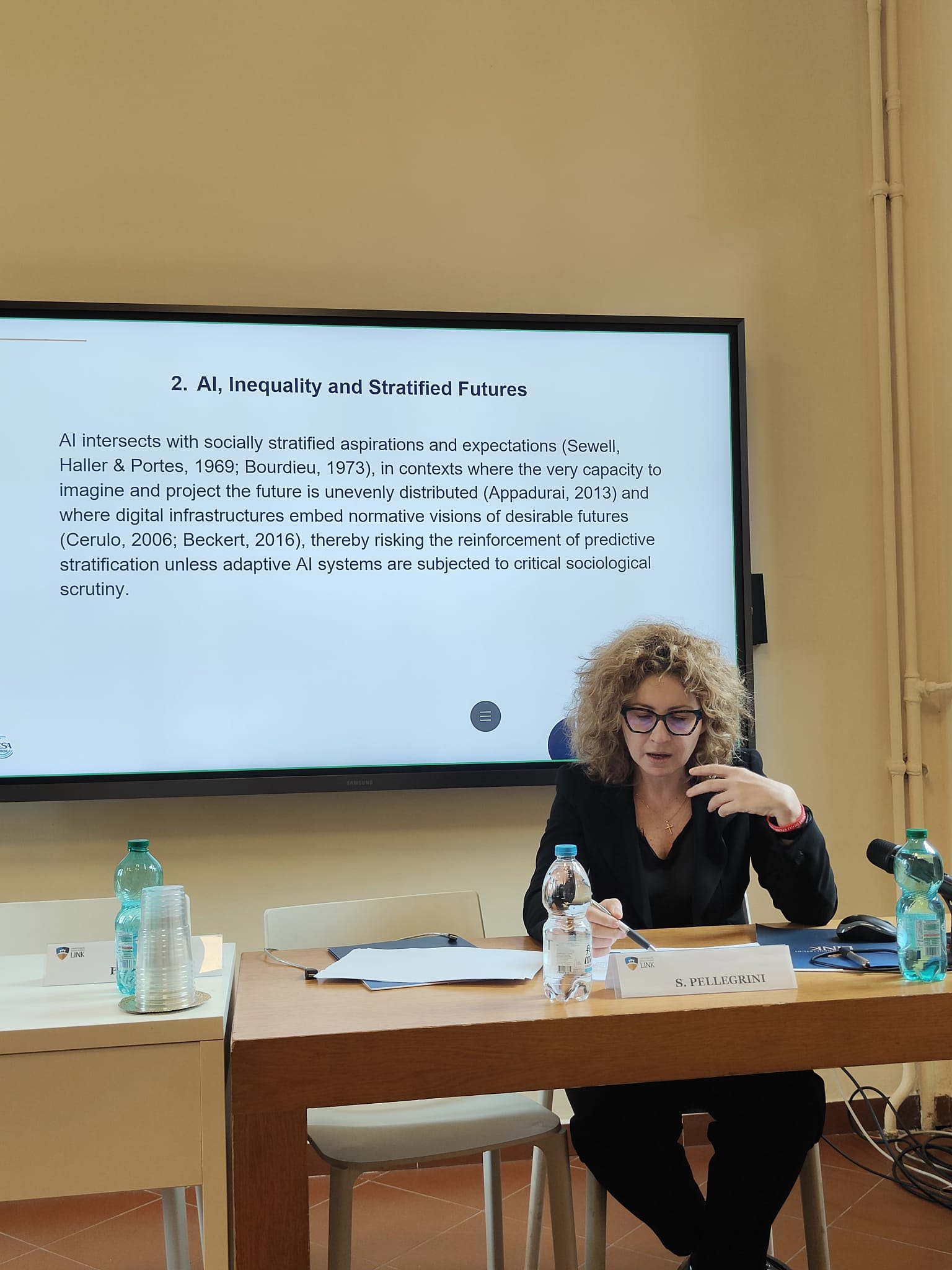
- Rethinking Learning Futures: Sociological Perspectives On Ai, Cognitive Adaptivity And Educational Transformations – S. Pellegrini, R. Mancini, R. Sebastiani, Link Campus University
- The Use Of Artificial Intelligence In Inclusive Learning: Field Trials – B. Letteri, University of Sassari
- Social Empathetic Cognitive Robotics For Autism (SECRA): A Protocol Design Involving Parents Of Children With Autism – T. Caprì, F. P. Sortolano, G. Todaro, P. Chilà, F. Marino, Link Campus University
Panel VIII – AI & Work
Chair: E. PROIETTI, Roma Tre University
Discussant: L. DE VITA, Sapienza University
- The Impact of Artificial Intelligence on Work and Lifelong Learning – A. Bianco, “G. d’Annunzio” University of Chieti-Pescara
- Educating For Artificial Intelligence: Learning Pathways, Gender, And Emerging Digital Inequalities – F. Fortunato, S. Muccio, IULM University Milan
- A Multimodal AI-Based Virtual Assistant For Adaptive Ergonomic Training In Hybrid Work Environments– E. Pietrafesa, G. Simoncelli, L. De Angelis, A. Martini, S. Anastasi, C. La Gioia, INAIL
- Digitalising Care, Reconfiguring Welfare: The CESU+ Model As A Digital Public Platform For Labour Formalisation – M. De Minicis, INAPP
Panel IX – AI in Education
Chair: C. FONZO, INAPP
Discussant: M. FREDDANO, INVALSI
- Peer Review As A Collaborative Methodology For Quality And Learning In Vocational Education – L. Evangelista, C. Fonzo, INAPP
- Developing Teachers’ Competences For Inclusive Gifted Education: The Gifted Game-Based Ecosystem As A Digital Training Environment – R. Renati, Link Campus University
- Evaluating E-Learning Platforms For Ai-Enhanced Project-Based Learning: Case Of Lithuanian Primary Education – K. Kesylė, J. Melnikova, G. Šmitienė, A. Batuchina, A. Norvilienė, I. Rupšienė, N. Strazdienė, D. Baziukė, E. Brazauskienė, Klaipeda University
- Strategies For Ai Integration For Personalized Student’s Study In Higher Education Institutions – E. Župerkienė, H. Mishenina, S. Tarasenko, Klaipeda University
Panel X – AI and People and Citizenship
Chair: M. SESSA, CNR – IRPI
Discussant: P. SALVATI, CNR – IRPI
- For A Renewal of The Sociology Of Emotions. On The Relationship Between Fear and Artificial Intelligence – E. Susca, IULM University, Milan
- Living With The Algorithm: Bonds, Ethics And Care In Smart Homes – R. Gurashi, Link Campus University
- For Effective Citizen Science: The Case Of Desenzano Del Garda – I. Beretta, A. Molinari
- Between Dependence and Risk: Young People’s Digital Behaviours and Forms of Vulnerability – M. Bonanni, O. Giancola, B. Pasanisi, Sapienza University
PhD Panel
Chair: F. CAGNOLI, PhD Representative, Board Member, ESA RN24
Discussant: M. RUZZEDDU, Unicusano
- Technicist Culture And Forms Of Knowledge: The Case Of Digital Competencies – C. Petrocchi
- Ai Between The Risk Society And The Algorithmic Society: The Case Of Education – N. Santone
- Algorithmic Affect And Learning: Impacts Of Ai On The Affective And Social Dimensions In Educational Spaces – N. Pietropaolo, F. Pietroniro
- Work-Related Stress And Hybrid Work: The New Inail 2025 Methodology Between Soft Law And Prevention Obligations Under Legislative Decree 81/2008 – F. M. Spanò
- Training And Digital Governance In The Italian “Uffici Di Esecuzione Penale Esterna” – J. Malponte
ORGANISING COMMITTEE
Federica CAGNOLI, PhD Representative, Board Member, ESA RN24
Elisa PISTONE, DITES research center, Link Campus University
Gianluca SENATORE, Sapienza University
Ilaria IANNUZZI, Unitelma Sapienza
Giorgia Elisa CAFIERO, Sapienza University
Tiziano CENSI, Leoniano Theological Institute
Nicholas PIETROPAOLO, Sapienza University
Caterina PETROCCHI, Sapienza University
Francesco PIETRONIRO, Sapienza University
Nicolò SANTONE, University of L’Aquila
CONFERENCE SECRETARIAT
Federica Cagnoli & Elisa Pistone
LOCAL ORGANIZATION
Fatima Bouhsis, Branka Cvijovic & Manuela Minozzi, Research Office
Valentina Caferri & Michela Staderini, Third Mission & Career Service
Giada Moretti & Valentina Fabiani, Logistic
Giuseppe Scandaglia & Simona Pontremolesi, Communication
Ivano Adamo & ICT Staff
Marzia Martins Moreira & Art Caffè Staff
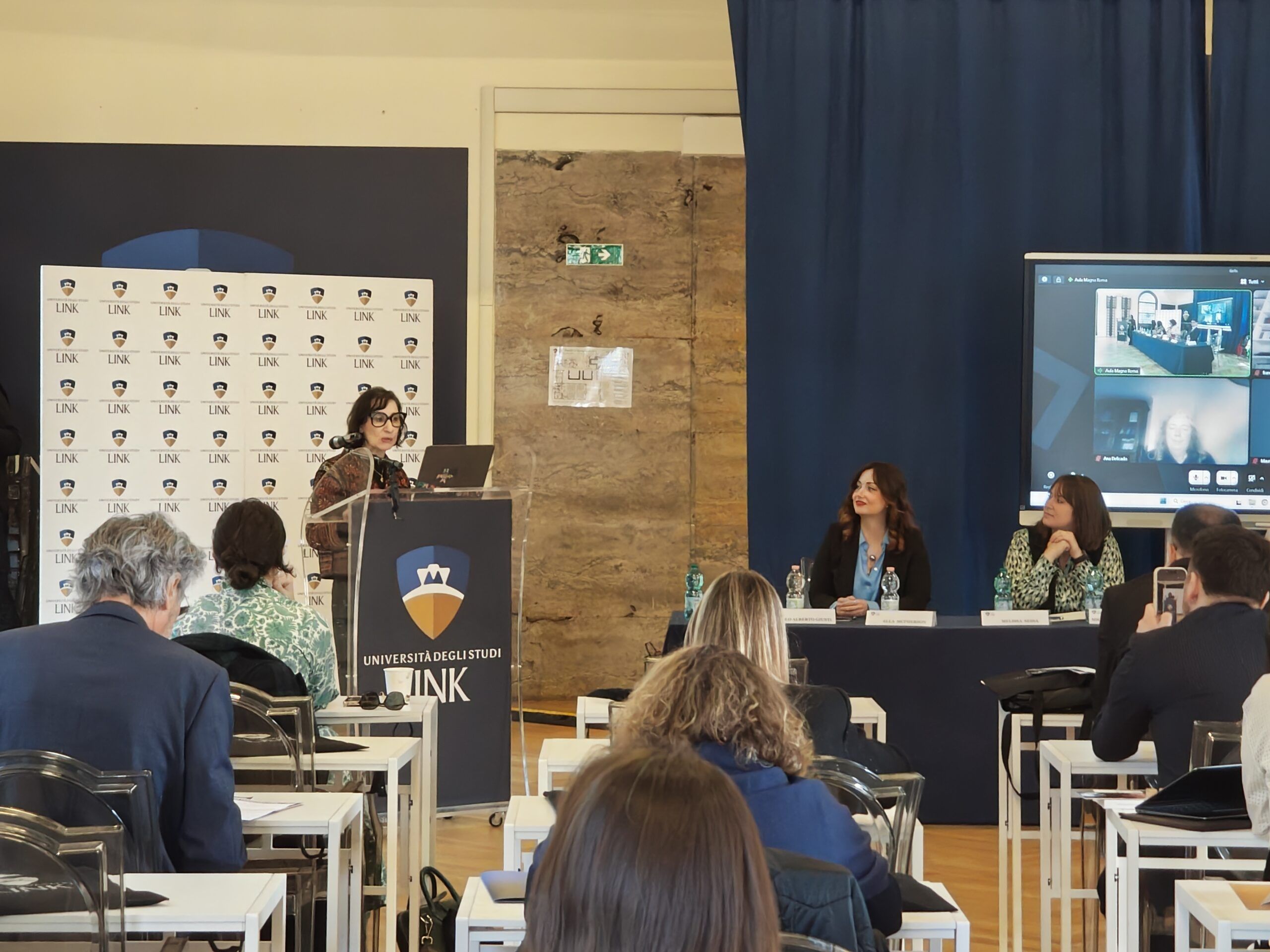
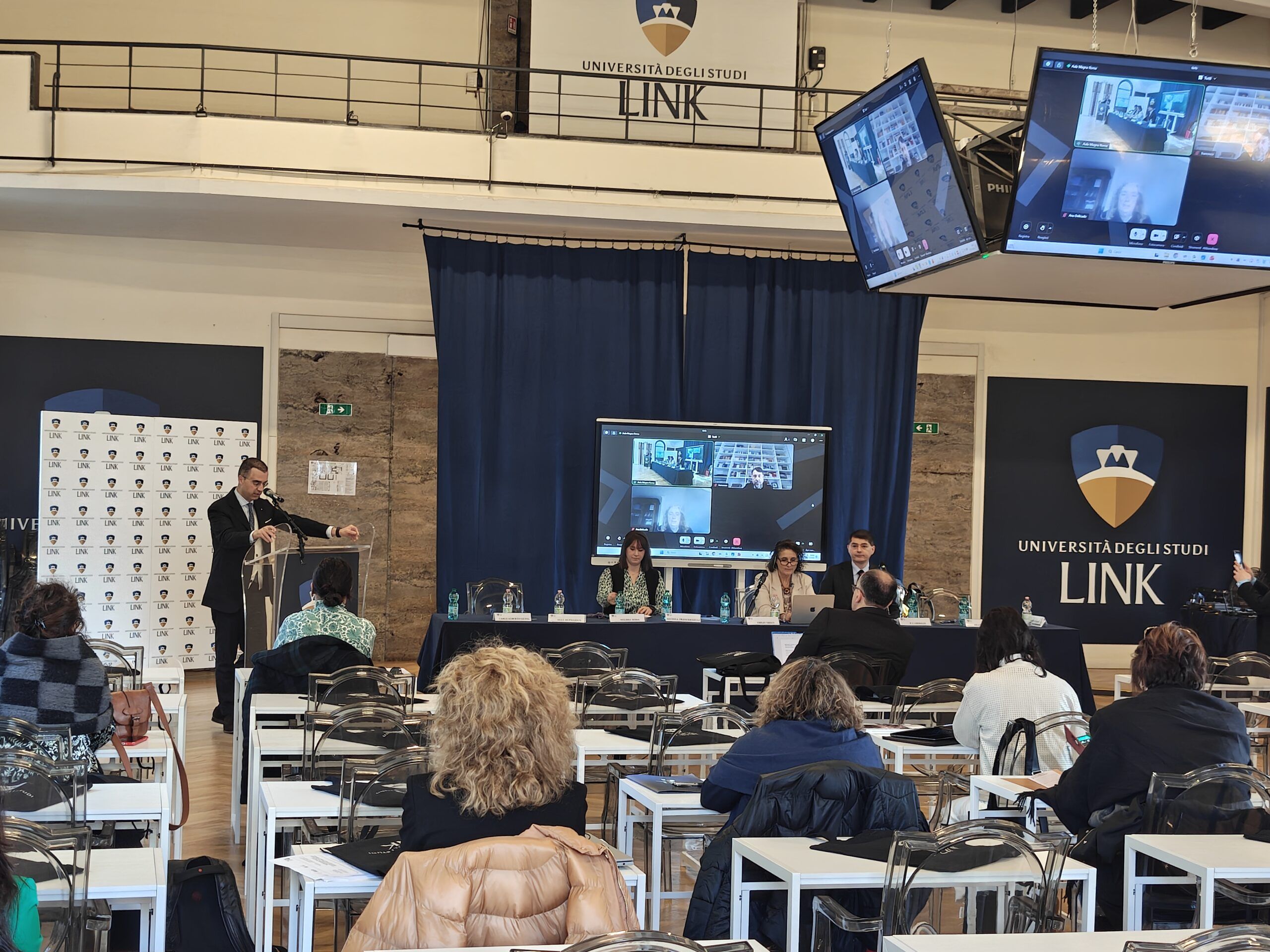
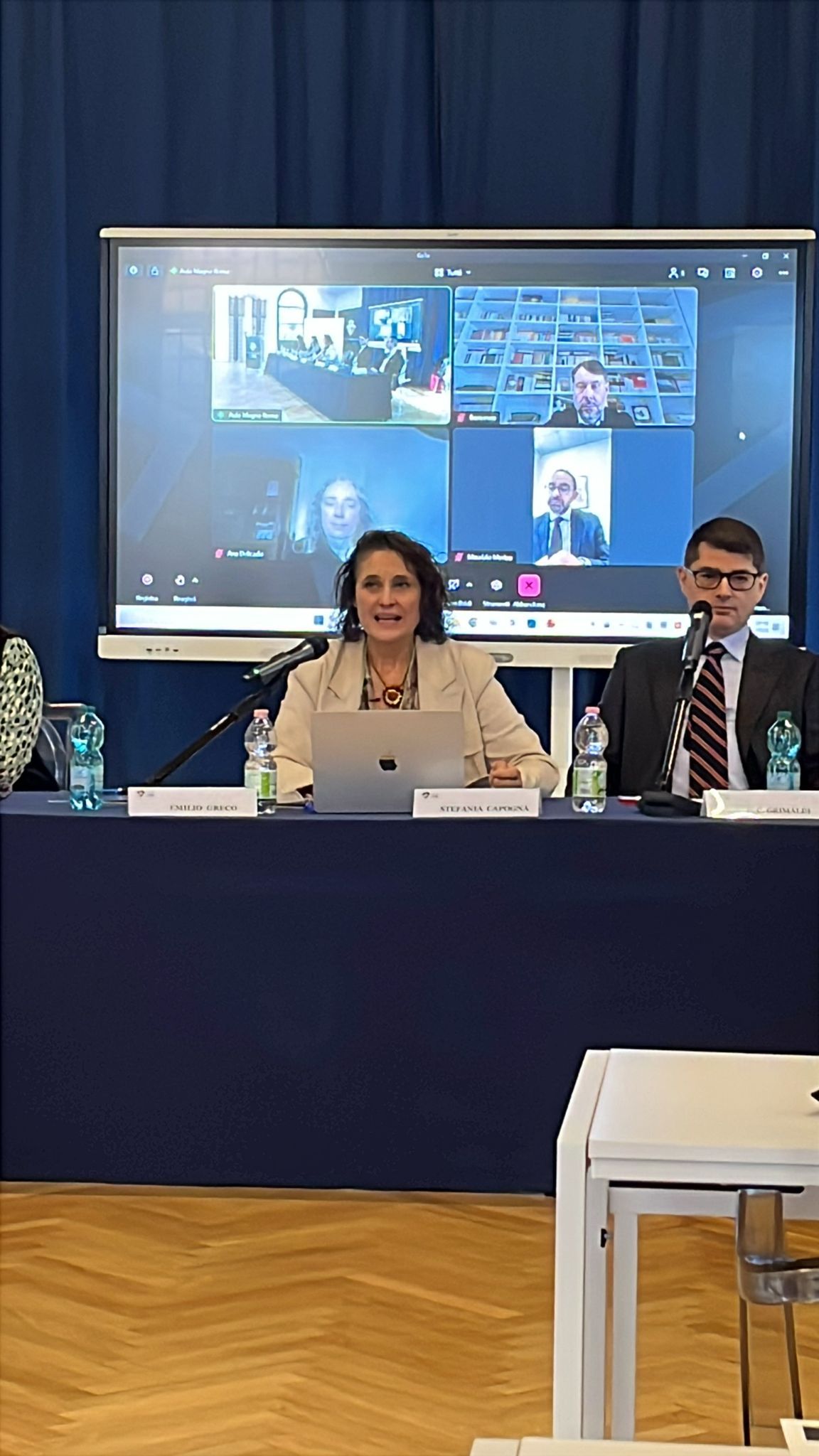
Photo Gallery
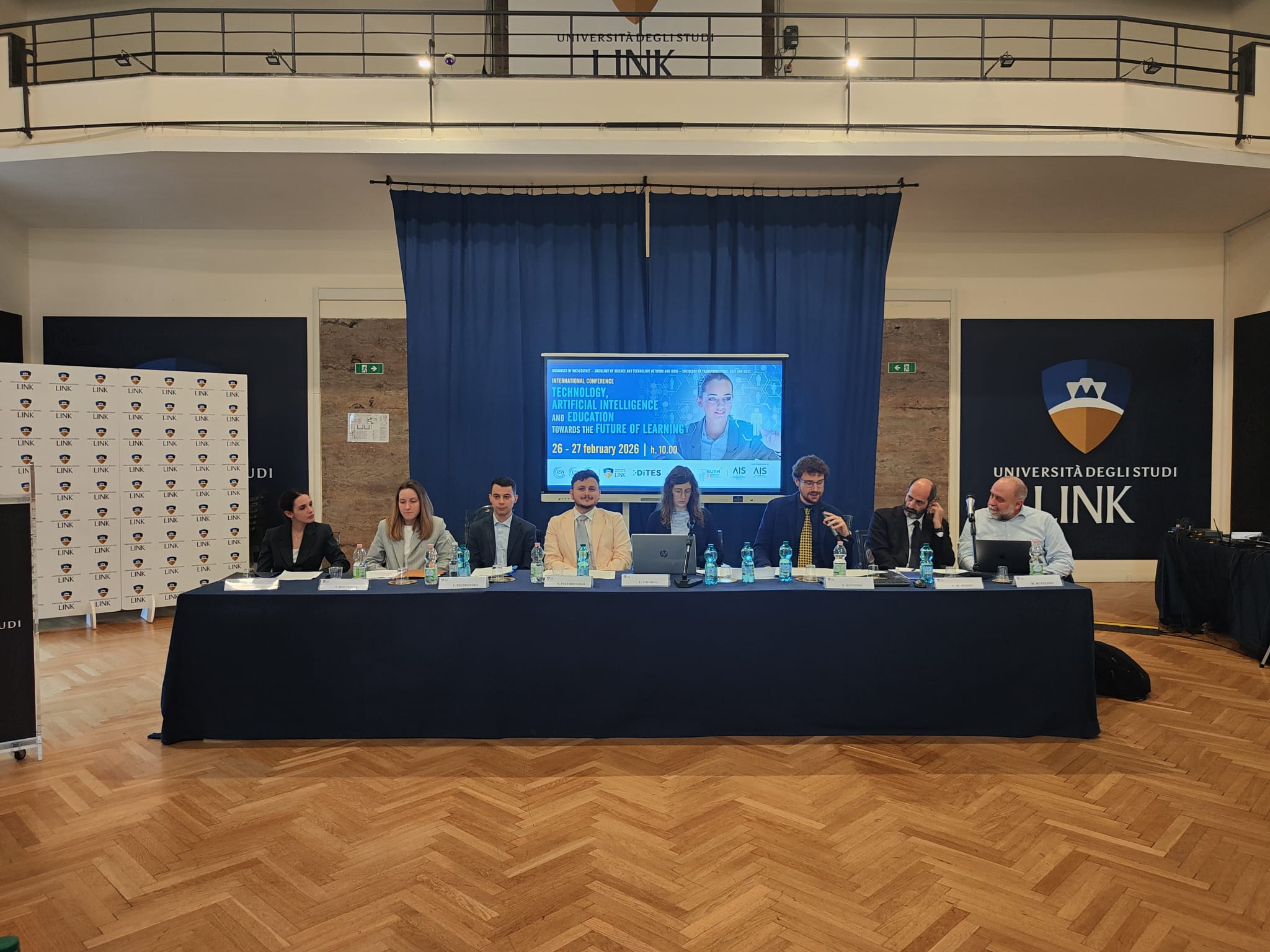
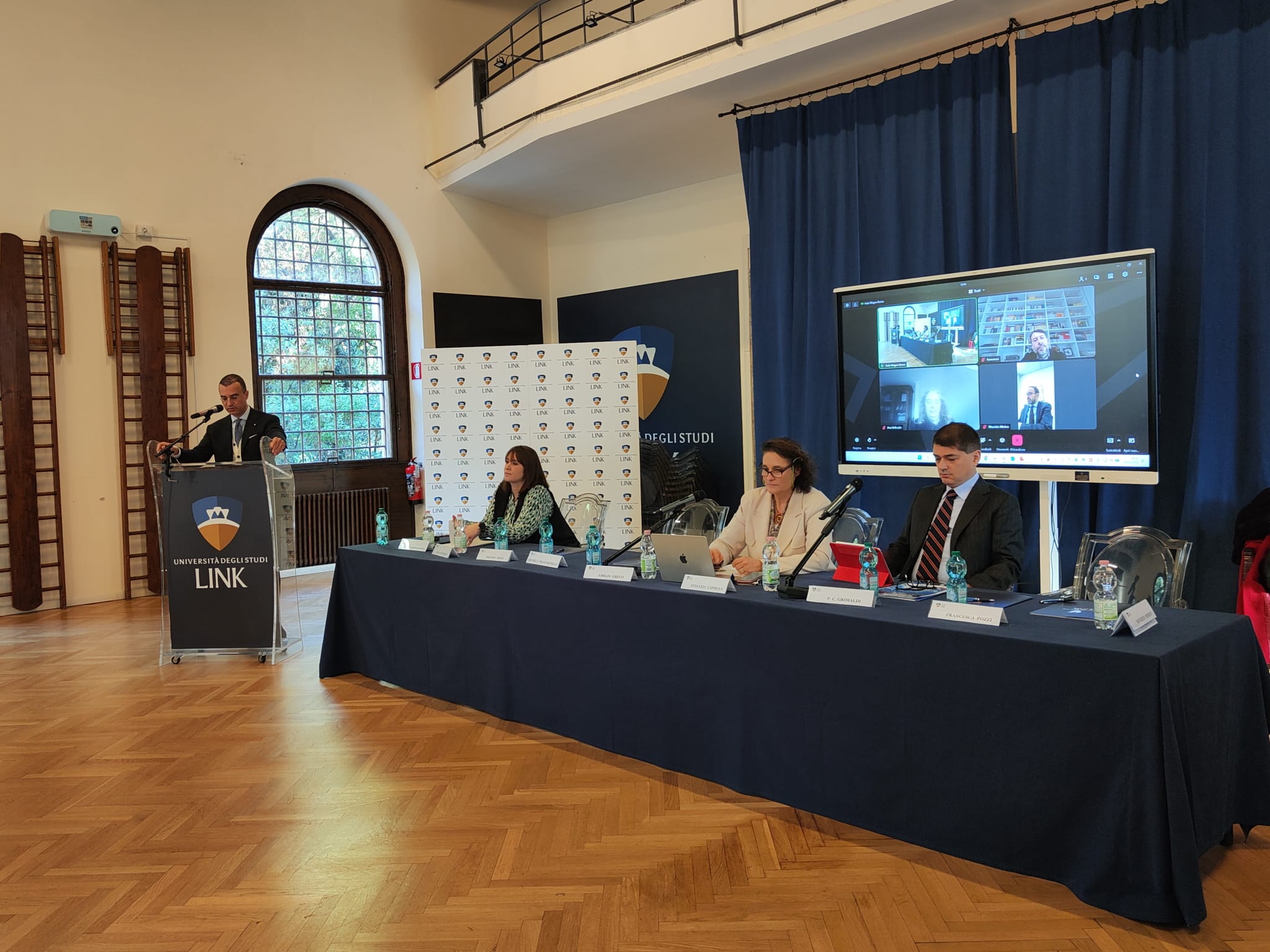
The book of abstract is available in open access on the website of the journal Community Notebooks:: https://doi.org/10.61007/QdC.2026.1.1
For more information: rn24.sstnet@gmail.com ,dites.progetti@unilink.it